
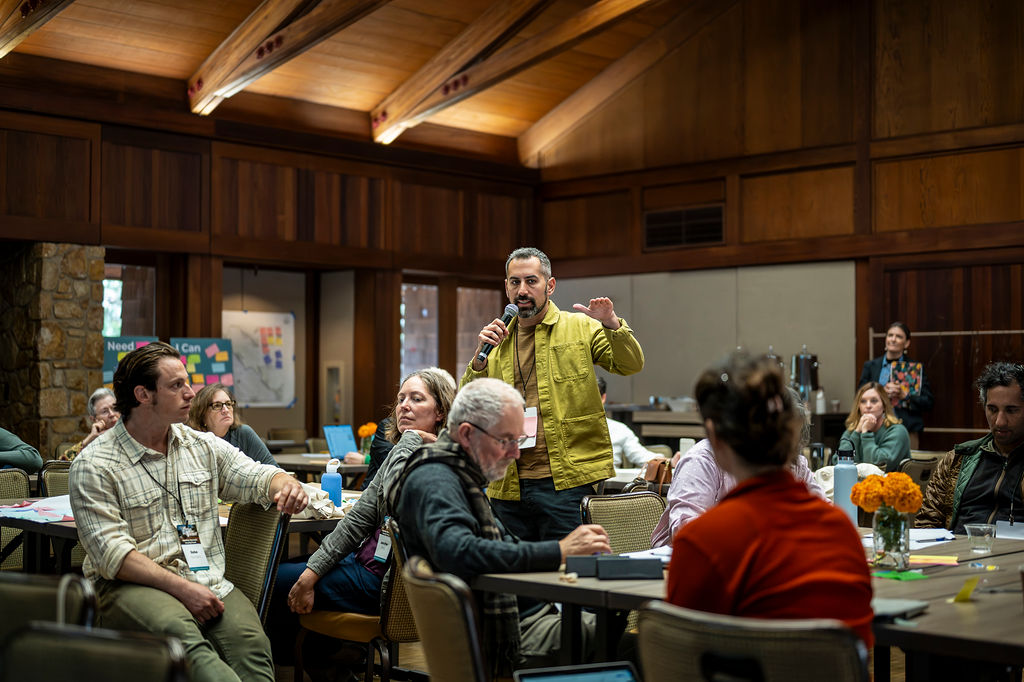
A Powerful Convergence of Changemakers
The Monterey Attainable Housing Forum brought together an impressive coalition of stakeholders committed to solving one of California’s most pressing challenges. Organized by the nonprofit Regenerative California and expertly facilitated by the Aurora Collective, this two-day gathering at the beautiful and historic Asilomar Conference Grounds united policymakers, landowners, and capital stewards in a shared mission: creating lasting change in the county’s housing landscape.
I am proud to have attended and directly contributed to this important convening, which focused specifically on the needs of the “missing middle”: residents earning between 80 and 150 percent of the Area Median Income (AMI). These professionals form the backbone of our communities, including teachers, firefighters, police officers, healthcare workers, and nonprofit employees.
The Human Cost of Inaction
One county resident’s experience illustrated the severity of this crisis. She faces a three-year waiting list to see a doctor because most medical professionals cannot afford to live within an hour of their practices. When teachers commute from two counties away and firefighters face exhausting travel before their shifts even begin, the fabric of our community deteriorates.
As an advisory board member with Regenerative California, where I focus specifically on fund partnerships and innovative capital solutions, I have worked closely with Executive Director Kristin Coates and the organization’s leadership team on these critical issues. Regenerative California, through the guidance of the pilot region community members in Monterey County, has determined that housing access is a foundational element of building a truly regenerative economy. Without solving housing accessibility, we cannot create the resilient, circular economic systems our communities need to thrive.
Scale of the Challenge
Our initiative is focused on adding 3,000 homes in Monterey County over the next five years, but the need is much bigger. In the state of California, somewhere between 1 to 1.5 million homes are needed specifically for the missing middle, who are increasingly priced out of stable, dignified housing. This initiative serves as a pilot that hopes to create a pathway for increasing missing middle housing not only in Monterey County but across the rest of the state.
Day One: Design Thinking and Stakeholder Collaboration
The forum opened with a comprehensive session led by Aurora Collective co-founder Ashley Muse, who guided participants through design thinking methodology. The structure created an environment optimized for collaboration and innovation.
Participants organized into stakeholder-specific groups (capital stewards, landowners, and employers) to identify unique obstacles and explore potential solutions. The full group then reconvened to examine two real-world housing development case studies, working in small teams to generate strategies for overcoming typical challenges in building attainable homes.
Day Two: From Analysis to Action
The second day shifted from problem identification to solution generation. Using divergent and convergent thinking principles, smaller breakout groups explored possibilities before narrowing down to actionable proposals.
Three initiatives emerged as priorities for 90-day design sprints:
-
- A Blended Strategy Real Estate Fund – A new financing vehicle specifically designed to support attainable housing development
-
- A Land Development Database – A comprehensive resource to identify and track potential development opportunities
-
- A Permitting Acceleration Initiative – A working group dedicated to streamlining construction and approval processes with local government
 Leading the Fund Partnership Initiative
I have volunteered to champion the blended strategy real estate fund initiative with Gabriel Sanders, director of the Opportunity Housing Trust, a community land trust based in the county. Over the next three months, I will collaborate with impact finance and real estate professionals to analyze the financing challenges developers face and design capital solutions that can accelerate progress.
This feasibility study will explore how innovative financing structures can bridge the gap between market-rate returns and the social imperative of attainable housing. By understanding both constraints and opportunities in the current system, we aim to create a fund that can catalyze meaningful change in Monterey County’s housing landscape. This work aligns directly with my role on Regenerative California’s advisory board.
The Role of Construction Technology Innovation
Solving the attainable housing crisis requires more than creative financing. Lower cost housing technology solutions play a critical role in making homes accessible to middle-income families. Companies like Shibusa Systems are developing innovative construction technologies that can significantly reduce building costs while maintaining quality and sustainability standards.
Shibusa Systems has developed a component-based, asset-light, kit-assembled home building system that reduces construction costs by 30 percent compared to traditional stick-built methods. This approach allows homes to be constructed in just 6 to 8 weeks, dramatically accelerating the path from approval to occupancy. By reimagining the construction process itself, Shibusa’s technology addresses both the cost and timeline barriers that have long plagued attainable housing development.
I am grateful to sit on the board of Shibusa Systems and work with Shibusa leadership, including CEO Katy Reynolds who joined the forum, in moving this bold vision for housing into reality.
Acknowledgments
This work would not be possible without the vision and commitment of key supporters. Bill Hayward and Mike Freed have provided instrumental funding for these initiatives, recognizing that attainable housing is foundational to resilient communities. The Office of Supervisor Kate Daniels, both a Monterey County Supervisor and advisor to Regenerative California, has been instrumental in advancing this work. Diane Coward’s contributions through Revision West and her collaborative approach to solving complex development challenges have been invaluable to this effort. Their support exemplifies the impact of strategic, solutions-oriented engagement.
The Path Forward
The Monterey Attainable Housing Forum demonstrated that solving the housing crisis requires structured collaboration, innovative thinking, and committed follow-through. By bringing together diverse stakeholders and channeling their expertise into concrete action plans, the forum has established a framework for meaningful progress.
The next 90 days will be critical in determining whether this gathering translates into tangible outcomes. Our goal is clear: creating homes where teachers, nurses, and firefighters can afford to live in the communities they serve. The feasibility studies and working groups emerging from this forum represent our commitment to moving from conversation to implementation.
As Regenerative California has emphasized, housing access is not merely a social issue but an economic imperative. Building a regenerative economy requires ensuring that the people who sustain our communities can afford to live in them. By combining innovative financing with breakthrough construction technologies and public-private partnerships, we can transform this challenge into an opportunity for systemic change.
Learn More